

For many expats living in Singapore, discovering food is one of the easiest ways to understand a new culture. A familiar flavour can bring comfort, while an unfamiliar dish can open the door to a completely different culinary tradition.
Among Japan’s many beloved comfort foods, soup curry offers a unique experience that goes beyond the usual expectations of Japanese cuisine. While many diners are familiar with Japanese curry, curry rice, and even curry udon, fewer have encountered the Sapporo creation that transforms curry into a fragrant and warming bowl of soup.
Originating from Hokkaido’s capital city, Sapporo soup curry is a dish built around contrast. Instead of the thick sauce associated with traditional Japanese curry, it features a light curry flavored soup filled with aromatic spices, colourful vegetables, and tender meat.
Today, this Hokkaido creation has travelled internationally, with soup curry restaurants introducing more diners to the flavours of Hokkaido soup curry and its unique approach to comfort food.
From Japanese Curry to Sapporo’s Unique Soup Dish
Japan has a long relationship with curry, but not all curry dishes follow the same style. A typical Japanese curry is usually made with a thick curry roux, creating a rich sauce served over rice. This familiar dish, often called regular Japanese curry, has become a household favourite across Japan.
However, soup curry follows a completely different philosophy. The first soup curry appeared in Sapporo during the 1970s, inspired by herbal soups and South Asian spices. Rather than creating a heavy sauce, chefs developed a spiced soup that highlighted the natural flavours of each ingredient.
This became the foundation of the original soup curry, which later evolved into the classic soup curry enjoyed today. The dish combines Japanese cooking methods with spices such as curry powder and garam masala, creating a layered curry soup that is both comforting and refreshing.
Sapporo soup curry is characterized by its thin consistency, which is achieved by extracting spices into a rich stock, contrasting with the thicker, sweeter traditional Japanese curry. Unlike most curries, where ingredients blend together into one sauce, soup curry allows every component to remain distinct. The broth, vegetables, and meat each contribute their own texture and flavour.
The Fried Vegetables That Define Hokkaido Style Soup Curry
The appeal of Hokkaido style soup curry comes from the careful preparation of its ingredients. A typical bowl contains assorted vegetables, seasonal produce, and protein arranged beautifully in a bowl of aromatic broth. Mainly, vegetables in soup curry are served in large, chunky cuts and commonly include carrots, potatoes, bell peppers, and eggplant.
Common ingredients include bell peppers, lotus root, carrots, potatoes, and kabocha squash. These vegetables are often prepared using the Japanese su age technique, where chefs deep fry or flash fry vegetables without batter.
Cooking times for vegetables using the su-age method can vary, with bell peppers taking about 30 seconds and potatoes up to 3 minutes to achieve the desired texture. This creates deep fried vegetables and fried vegetables that maintain their vibrant colours and natural sweetness while adding another layer of texture to the dish.
Some restaurants also include roasted vegetables or other root vegetables depending on the season. Using seasonal ingredients reflects an important part of Japanese cooking, where freshness and balance are prioritised.
The protein is equally important. A traditional serving often features bone in chicken that is slowly cooked until tender. The chicken is prepared separately before being added to the soup, allowing the outside to become nicely browned and golden brown while keeping the inside juicy.
Building the Perfect Curry Soup
Behind every memorable soup curry is a carefully developed soup base. Many chefs begin with chicken broth made using chicken bones, creating a deep foundation before adding spices and aromatics.
Ingredients such as garlic and ginger are often cooked over medium high heat to release their fragrance before being combined with spices. Some variations also include tomato paste to add richness and balance, while others experiment with ingredients like coconut milk for a smoother flavour profile.
The broth is usually prepared in a heavy bottomed pot or dutch oven, allowing flavours to develop through a gentle simmer. This slow cooking process creates the signature light broth that makes soup curry different from heavier curry dishes.
For those documenting their own preparation of what soup curry tastes, a detailed review recipe may explain the process step by step. A recipe developer might include notes about ingredient choices, preparation methods, and the importance of timing, although the heart of the dish remains the same: respecting each ingredient.
The Art of Preparing Vegetables and Steamed Rice
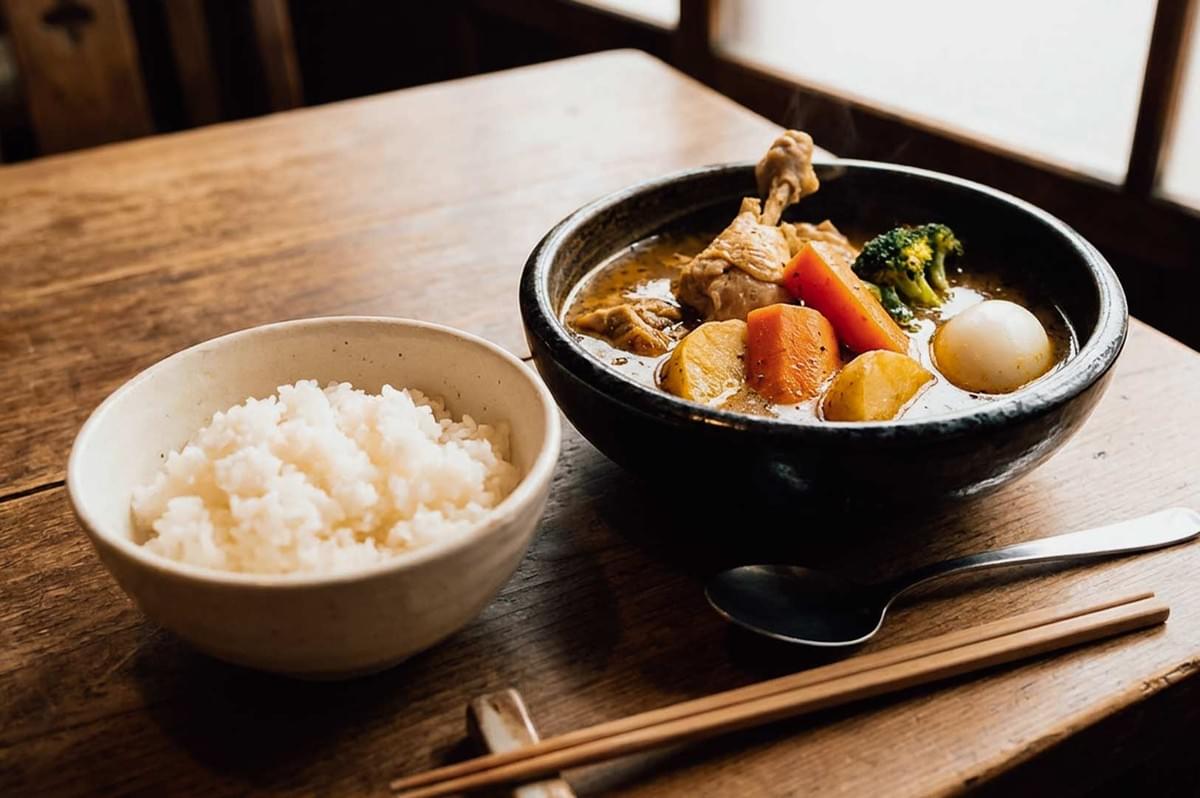
One of the reasons soup curry feels different from other curry dishes is its presentation. Instead of everything being mixed together, the ingredients are arranged carefully to create a complete soup curry meal.
Vegetables such as peppers or lotus root may be sliced half lengthwise before cooking to preserve their structure. After chefs deep fry the vegetables, they may place them on a wire rack or sheet pan lined with paper towels or a kitchen towel to remove excess oil.
The preparation requires careful cooking time because every vegetable has a different texture. The goal is to maintain the balance between crisp vegetables and the rich curry broth. The dish is traditionally served with steamed rice or Japanese rice on the side. Unlike some curry dishes where rice and sauce are combined immediately, soup curry is usually served separately.
Diners can choose how much rice they want with each spoonful of soup. For first-time visitors wondering how much rice they need, a smaller portion in a small pot is often enough because the focus is on enjoying the flavours of the broth and ingredients.
Discovering Soup Curry Restaurants in Singapore
Singapore’s diverse food scene has made it easier for expats to explore international dishes, and soup curry restaurants have become part of this growing culinary landscape.
If we're talking about Japan, popular soup curry restaurants in Sapporo include Picante, known for its personalized servings, and Soup Curry Garaku, which uses a rich pork bone broth that is stewed for two days. For those looking to experience this Hokkaido specialty closer to home, Soup Curry by Ki-Setsu will soon introduce Singapore diners to traditional Sapporo-style soup curry.
The upcoming Fortune Centre restaurant focuses on the defining elements of the dish: an aromatic spice-infused broth, Japanese rice served separately, and carefully prepared ingredients that highlight the natural flavours and textures of each component.
For expats, trying soup curry is not simply about finding another Japanese meal. It is about discovering how food traditions travel and adapt. Like many Japanese recipes, soup curry carries a story of geography, climate, and culture.
An Embrace of a Broth Across Cultures
Soup curry has earned its place as an iconic soul food because it represents more than just flavour. It reflects creativity, tradition, and the ability of food to connect people across borders. Sapporo soup curry has become an iconic soul food in Sapporo, beloved by locals and tourists alike, with a variety of restaurants offering unique flavors and broths.
From its origins as a Sapporo local specialty to its growing presence in Singapore, soup curry proves that food can travel across countries while still keeping its identity. Sometimes, all it takes is a bowl of soup to discover a new connection to another culture.
