

She'd been in Singapore for eleven days when she asked us, over lunch, what Hokkien mee actually was.
We could have pointed her to one stall. Given her a name, an MRT stop, a "you'll love it." But there's a problem with that. Send someone to a single plate of Hokkien mee and they'll think that plate is Hokkien mee — wet or dry, smoky or gentle, whatever landed in front of them. They'll never know there was an argument.
Because there is an argument. A quiet, decades-long one, carried out over kopitiam tables and hawker centre trays, about how this dish should be. Wet enough to slide off the spoon, or dry enough to catch a little char. Prawn stock so deep it stains the noodles, or a lighter, egg-forward plate that leaves room for the seafood to speak.
A Taste of Hokkien Mee Ahead
So we did the only sensible thing. We've eaten at all of these, some more times than we'd admit. We turned her first Hokkien mee into a journey instead of a single stop. Here's where we took her, and what we told her to notice along the way.
- Hokkien Man Hokkien Mee (Toa Payoh)
- Hong Heng Fried Sotong Prawn Mee (Tiong Bahru Food Centre)
- Nam Sing Hokkien Fried Mee (Old Airport Road Food Centre)
- Come Daily Fried Hokkien Prawn Mee (Toa Payoh)
- Swee Guan Hokkien Mee (Geylang Lorong 29)
- Ah Hock Fried Hokkien Noodles (Chomp Chomp Food Centre)
- Xiao Di Fried Prawn Noodle (Serangoon)
- YouFu Fried Hokkien Prawn Mee (Chinatown)
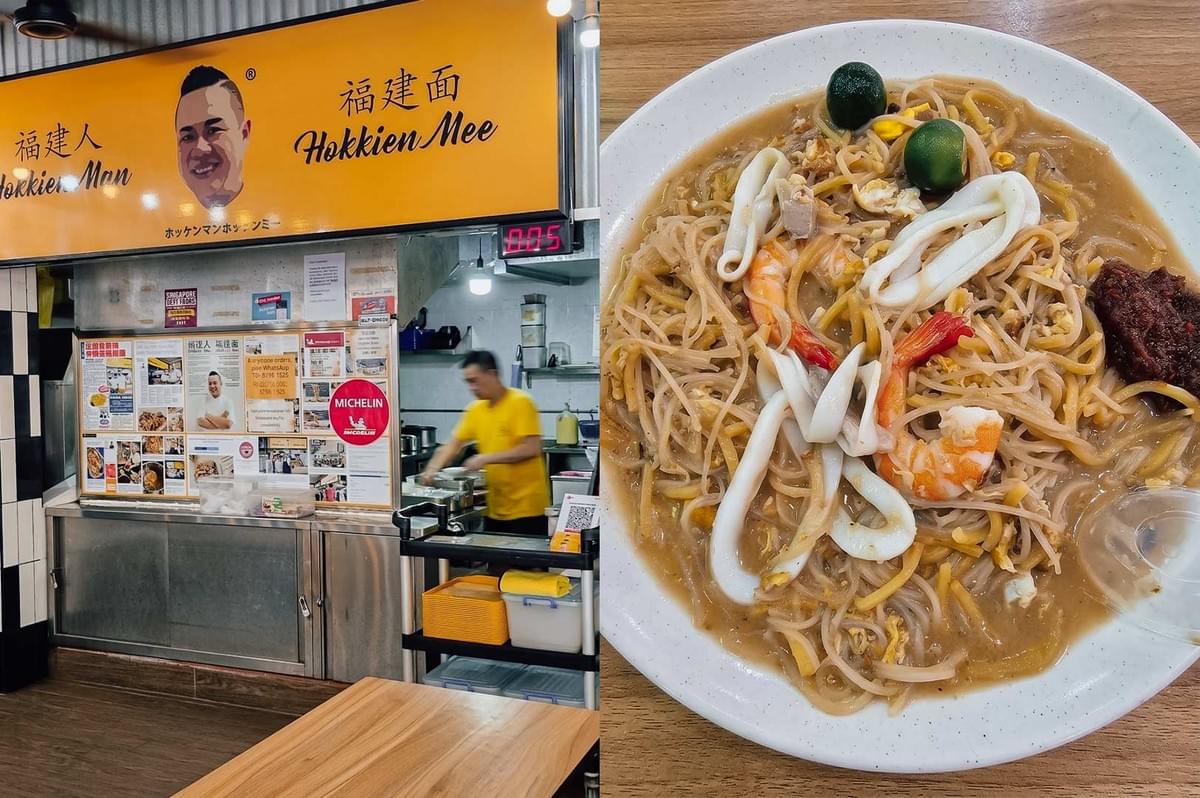
1. Hokkien Man Hokkien Mee (Toa Payoh) – Deep Prawn Broth for a First Taste of Fried Hokkien Mee
Getting There
Braddell MRT, about 10–12 minutes on foot
Dining Style & Spend
Wet-style hawker Hokkien mee, around S$6.50–S$18
We started her here on purpose. The man at the wok, Xavier Neo, used to cook at Les Amis, and he treats the broth the way a French kitchen treats stock — prawn heads and pork bones coaxed into something concentrated and glossy.
The plate arrives wet, the noodles slick and still a little springy despite everything they've soaked up. We told her to take the first few bites plain, before touching the sambal. She did, and went quiet. That's the prawn talking — a sweetness that's almost too much, then settles.
What makes the experience useful for a newcomer is the absence of aggressive char. It forces you to pay attention to the stock, which is exactly what we wanted her to understand before moving on to smokier versions.
What We Wanted Her to Notice
How much depth a Hokkien mee can get from its prawn stock even without dominant wok hei.
A Fair Warning Before You Go
If smoky, aggressively charred noodles are your benchmark, this may feel too restrained.
How We’d Order It
Go before noon, taste several bites without chilli first, then add sambal gradually.
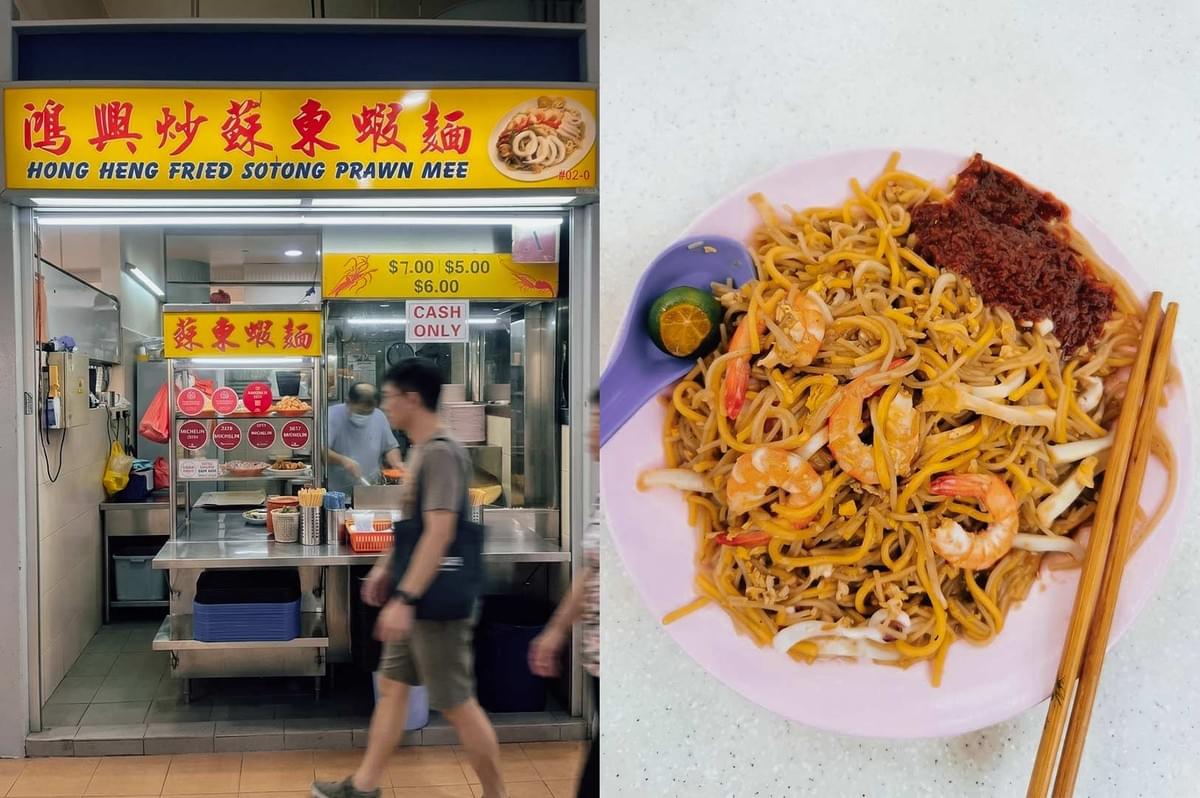
2. Hong Heng Fried Sotong Prawn Mee (Tiong Bahru Food Centre) – A Gentler Classic With Plenty of Seafood
Getting There
Tiong Bahru MRT, about 8–10 minutes on foot
Dining Style & Spend
Classic hawker Hokkien mee, around S$5–S$6
Michelin Bib Gourmand recipient in 2016 at Tiong Bahru Food Centre, Hong Heng is where we wanted her to notice the sotong and fresh prawns. Most stalls treat squid as an afterthought. Here it stands almost level with the prawns — fresh, tender and cooked to order.
The style sits between wet and dry. Seafood broth coats the noodles without drowning them, so the flavour clings rather than pools. We watched her expect a bigger punch and not quite find it. That's honest — the flavour here is gentler than its reputation suggests.
Then we handed her the lime juice. Squeeze, add a little spicy chilli, taste again. The acidity wakes the whole plate up, and she got it immediately.
What We Wanted Her to Notice
How seafood quality and acidity can change a relatively gentle plate of fried Hokkien prawn mee.
A Fair Warning Before You Go
This is not the stall to choose if heavy wok hei and powerful sambal are your priorities.
How We’d Order It
Arrive around 10.30–11am, then add lime and chilli only after tasting the noodles on their own.
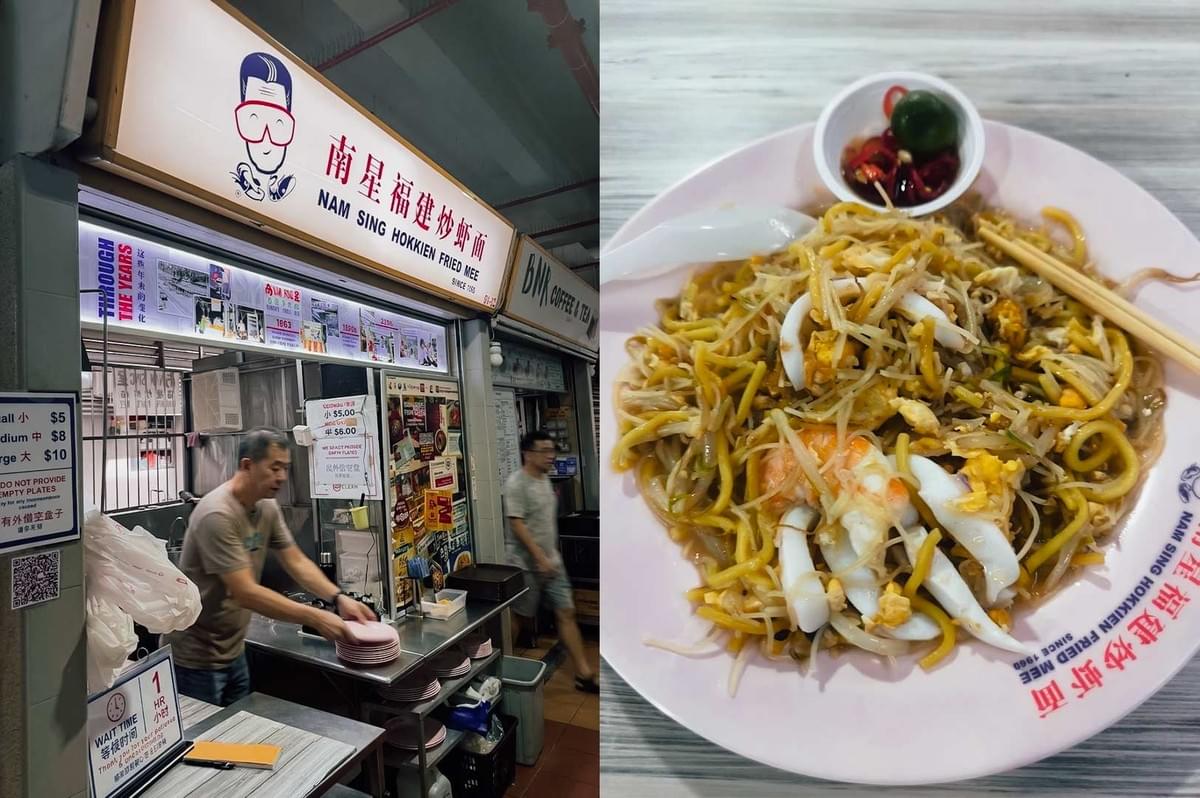
3. Nam Sing Hokkien Fried Mee (Old Airport Road Food Centre) – The Dry Side of the Fried Hokkien Noodles Debate
Getting There
Dakota MRT, about 7–9 minutes on foot
Dining Style & Spend
Dry-style traditional Hokkien mee, around S$5–S$8
This is where the debate really opened up for her. Nam Sing, going since the 1960s, is dry — proof that Hokkien mee doesn't have to swim in gravy at all.
Thin bee hoon drinks up most of the stock. Freshly cut red chilli replaces the mound of sambal she expected. And unusually for one of the old-school names, there is no fried pork lard.
She asked where the sambal was. We told her not to look for it. The cut chilli is the choice, not an oversight.
What We Wanted Her to Notice
That “Hokkien mee” can mean something remarkably different depending on how the stock is completely absorbed.
A Fair Warning Before You Go
Diners expecting rich prawn gravy may find the flavour too subtle, especially after a long wait.
How We’d Order It
Try it alongside a wetter Hokkien mee elsewhere at Old Airport Road Food Centre. The side-by-side comparison makes the difference much easier to understand.
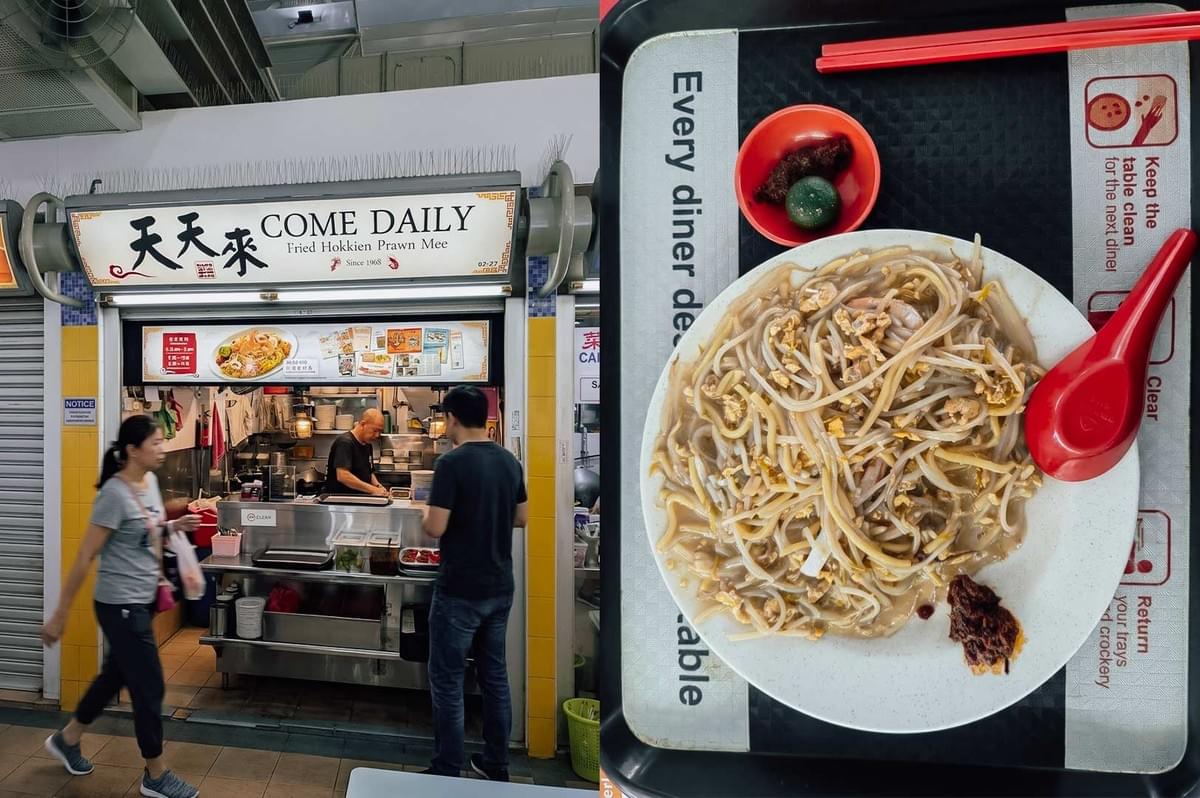
4. Come Daily Fried Hokkien Prawn Mee (Toa Payoh) – The Wet, Brothy Counterpoint of Fried Hokkien Mee in Singapore
Getting There
Braddell MRT, about 5–7 minutes on foot
Dining Style & Spend
Wet-style traditional Hokkien mee, around S$5–S$8
If Nam Sing is one end of the spectrum, we brought her here for the other. Come Daily Fried Hokkien Mee — also called Tian Tian Lai — has been at it since 1968, and its noodles are wet, gooey and unapologetic.
Yellow egg noodles and thin bee hoon soak up prawn-and-pork broth until they become soft and slippery. The egg fragrance rises before the plate even lands. There is fried pork lard when it's available.
She stirred hers straight through on instinct, and we stopped her. Mix a little into each bite instead so the crunch survives. She tried it our way and understood.
What We Wanted Her to Notice
The difference between noodles that carry stock lightly and noodles that practically become part of the broth.
A Fair Warning Before You Go
If you prefer dry noodles and pronounced char, this soft, wet style may not win you over.
How We’d Order It
Come early. It is one of the Hokkien mee stalls where breakfast can make more sense than waiting for lunch.
5. Swee Guan Hokkien Mee (Geylang Lorong 29) – The Wok Hei Lesson in Fried Hokkien Mee
Getting There
Aljunied MRT, about 5–7 minutes on foot
Dining Style & Spend
Charcoal-fired Hokkien mee, around S$8–S$15
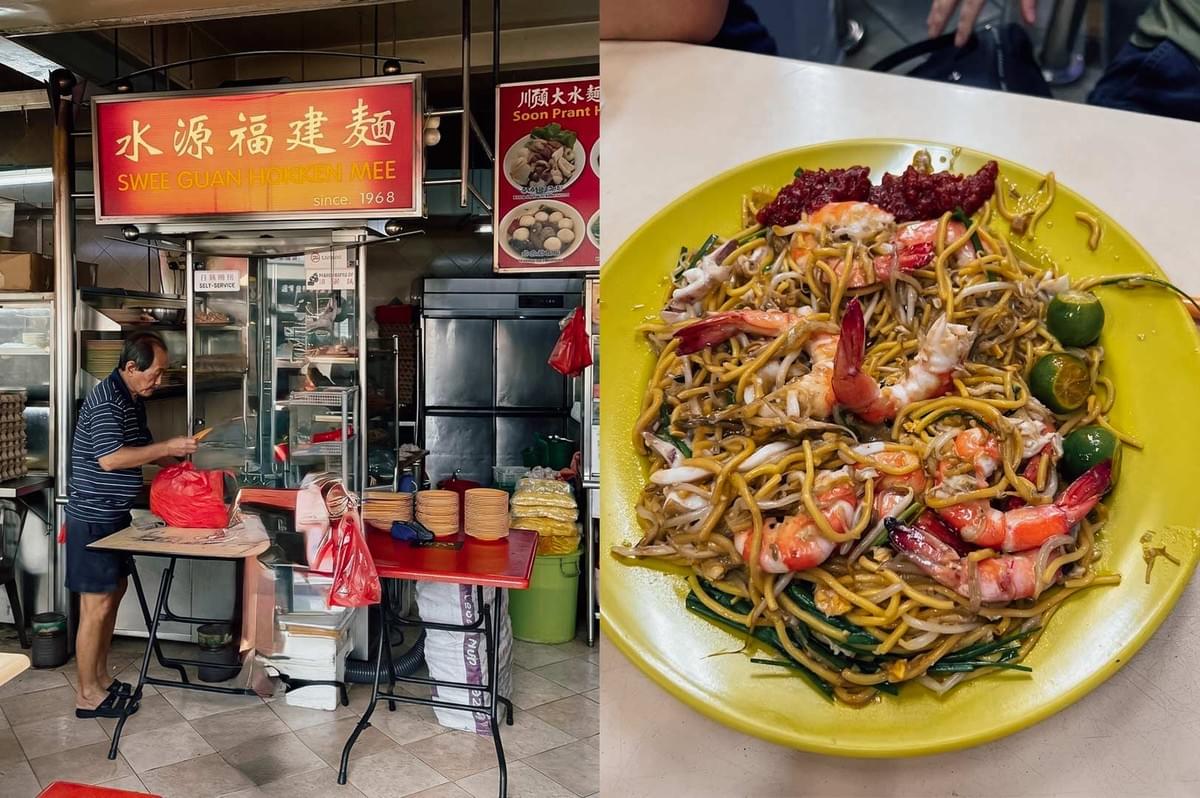
This was the stall we used to finally explain wok hei — that phrase she'd been hearing all week without quite grasping.
Swee Guan Hokkien Mee still cooks over an open charcoal flame. Pork-bone stock meets the wok, while the charcoal lays down another layer of smoke beneath the high-heat stir fry. The noodles arrive silky, slightly wet and unmistakably smoky.
She leaned over the plate before tasting it and breathed in. That's wok hei. You smell it before you taste it.
What We Wanted Her to Notice
How charcoal and high-heat cooking can change the aroma of the entire dish of fried Hokkien noodles.
A Fair Warning Before You Go
Portions can feel small for the price, and queues and brisk service are part of the experience.
How We’d Order It
Come close to opening in the evening and make sure you're at the correct charcoal-fired stall at Geylang Lorong 29.
6. Ah Hock Fried Hokkien Noodles (Chomp Chomp Food Centre) – Hokkien Mee as a Singapore Supper
Getting There
Lorong Chuan MRT, though a bus or taxi is more practical
Dining Style & Spend
Traditional hawker supper, around S$5+
By now she understood the styles. So we took her to Chomp Chomp — not just for the noodles, but for the night around them.
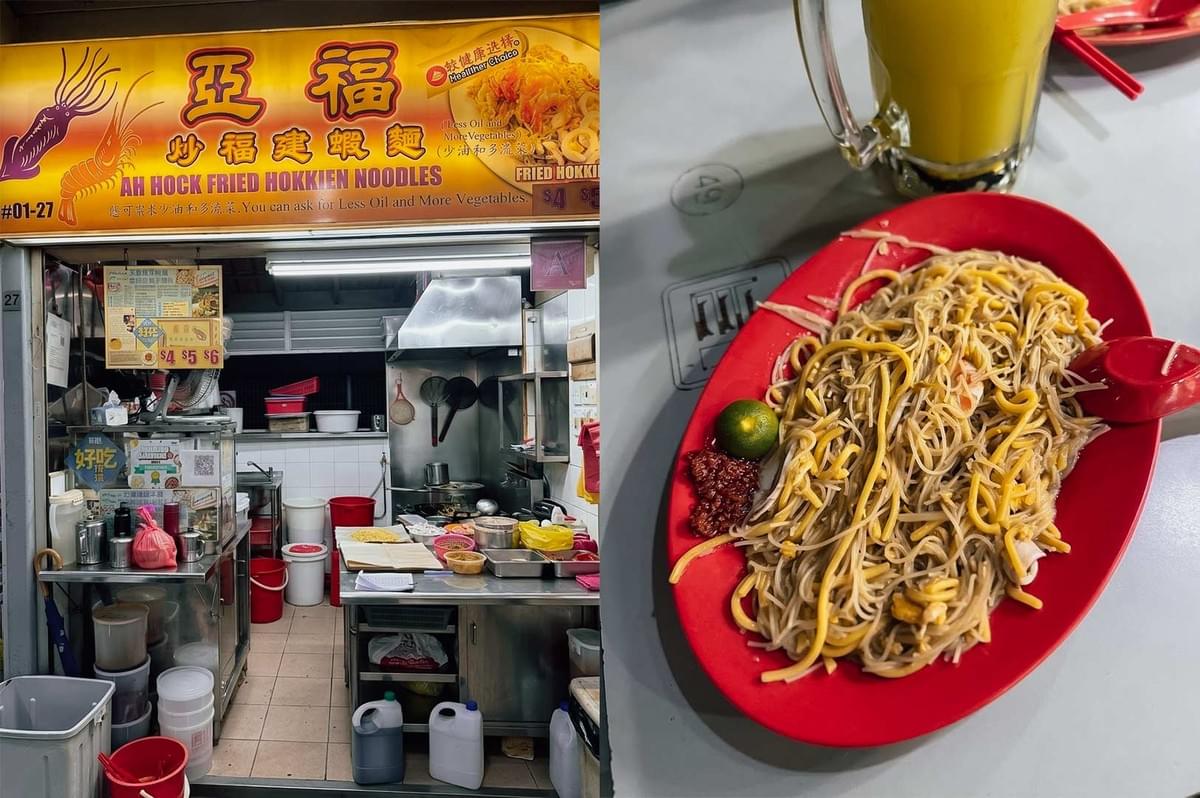
Ah Hock Fried Hokkien Noodles has been frying here since 1966, with thin bee hoon absorbing prawn-and-pork stock and chopped chilli replacing conventional sambal.
We'll be honest: it isn't always the same plate twice. Some nights the wok hei sings; other nights the seasoning drifts. But on a good night, under the lights with the whole food centre humming, it feels exactly right.
The real lesson was that Hokkien mee doesn't exist in isolation. It belongs alongside BBQ wings, stingray, satay and giant sugarcane juice.
That same idea of eating your way through a neighbourhood comes up in our Eating Your Way Through Fortune Centre Food 5 Delicious Stops For Expats guide, where the food trail matters just as much as the individual stops.
What We Wanted Her to Notice
How the setting around a dish can be as much part of Singapore's food culture as the dish itself.
A Fair Warning Before You Go
It is less convenient from the MRT and can be inconsistent between visits.
How We’d Order It
Make it a proper Chomp Chomp supper. Order the noodles alongside several other hawker favourites rather than treating it as a standalone meal.
7. Xiao Di Fried Prawn Noodle (Serangoon) – The Neighbourhood Discovery of Fried Hokkien Mee
Getting There
Serangoon MRT, followed by a short bus ride
Dining Style & Spend
Neighbourhood hawker-style Hokkien mee, around S$5–S$8
Once she'd tried the famous names, we wanted to show her something the crowds haven't fully found yet.
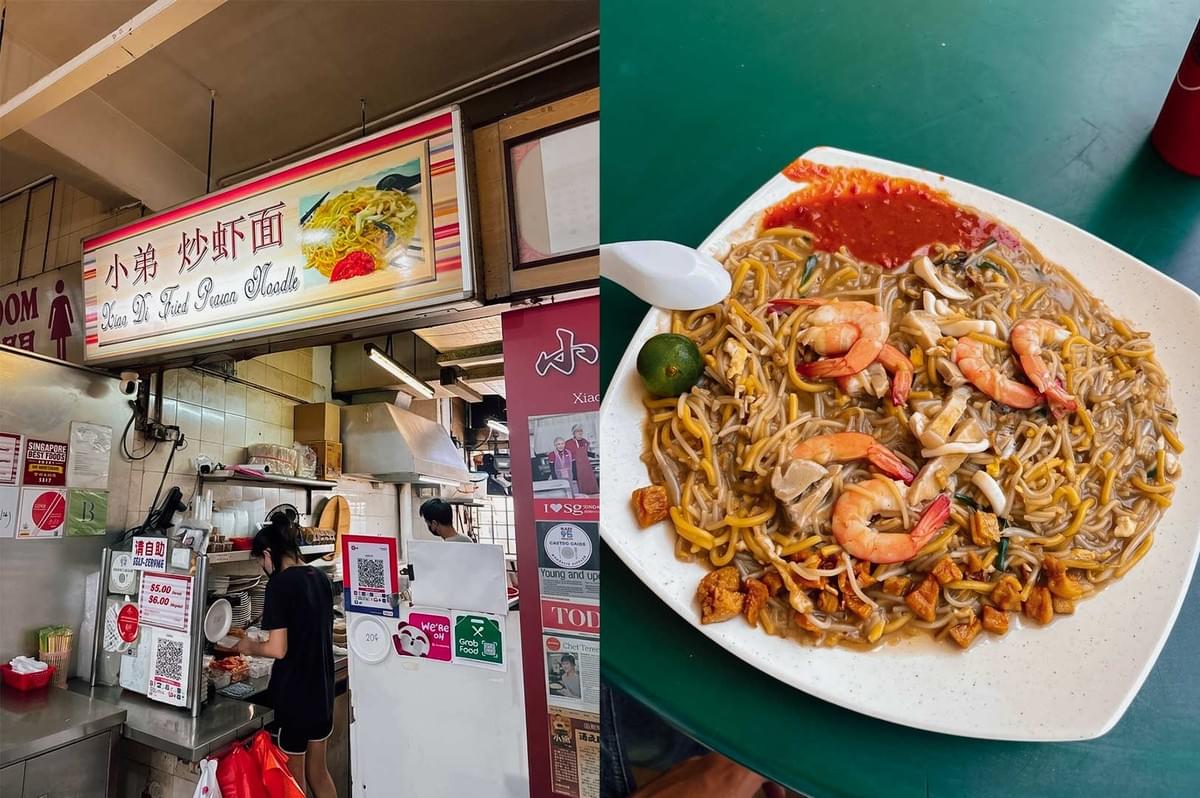
Xiao Di sits in a quiet eating house in Serangoon North, serving a wet plate with real wok hei and noticeable prawn umami. The prawns are fresh, the pork belly tender and the portions generous.
She said it was her favourite of the journey, and we didn't argue. Sometimes the plate nobody's queuing an hour for is the one that stays with you.
The catch is the opening window. It is lunch only, so this is not somewhere to wander toward late in the afternoon.
What We Wanted Her to Notice
That some of the most satisfying food discoveries happen outside Singapore's famous hawker centres.
A Fair Warning Before You Go
The short lunch service means timing matters.
How We’d Order It
Go before 1pm. If you cannot dine there, takeaway orders are a surprisingly credible option for this version.
8. YouFu Fried Hokkien Prawn Mee (Chinatown) – A Family Tradition Still Moving Forward
Getting There
Chinatown MRT, about 4–6 minutes on foot
Dining Style & Spend
Traditional hawker Hokkien mee, around S$5–S$9
We ended in Chinatown because we wanted her last plate to say something about where this dish is going, not just where it has been.
This stall is run by the father of the family behind the YouFu name — a friendly generational rivalry over who fries the better plate.
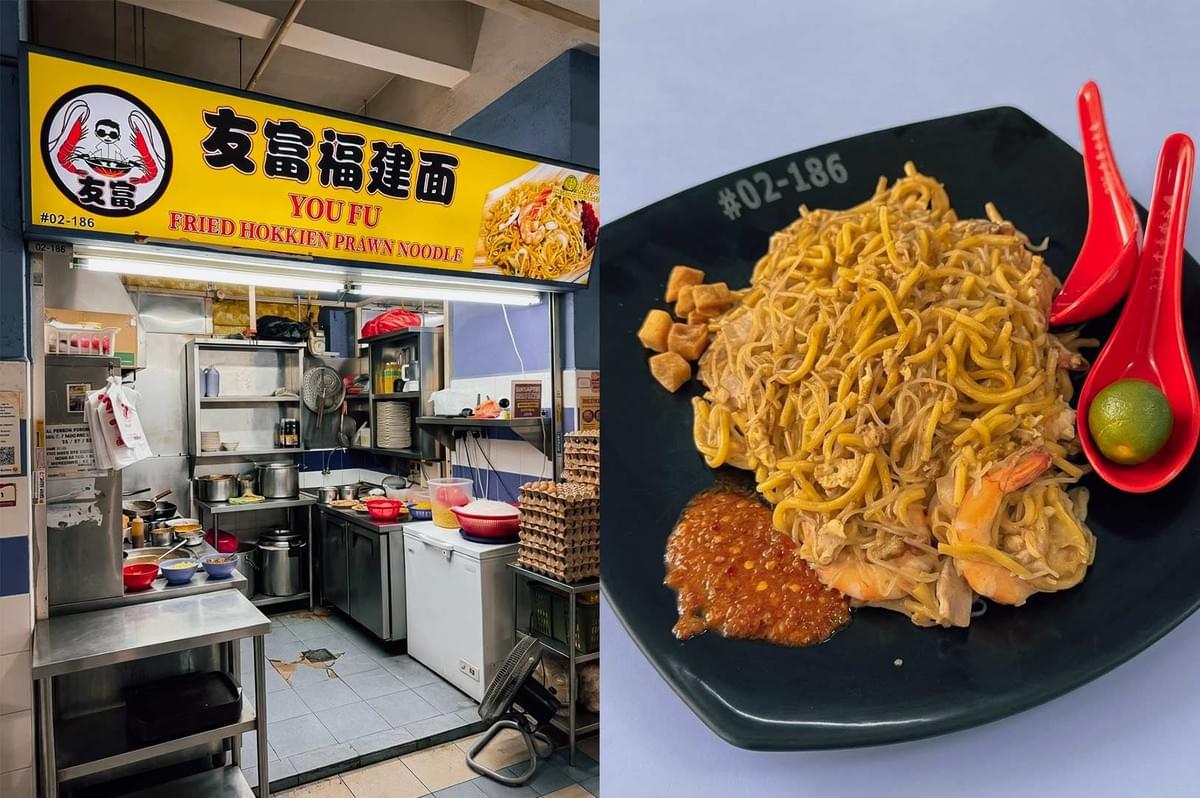
His version brings yellow egg noodles and thin bee hoon together with savoury prawn stock, egg, pork belly, prawns and crisp fried pork lard. It is medium-wet with good wok hei.
We taught her the one request worth remembering: ask for fried pork lard, because it isn't always added unless you say so. That small request changed her plate entirely.
What We Wanted Her to Notice
How traditional hawker dishes continue evolving through families and younger generations.
A Fair Warning Before You Go
The seafood can feel modest compared with the amount of noodles in some batches.
How We’d Order It
Ask for pork lard. For takeaway, ask whether the stall still offers the opeh-leaf wrapping — it can help retain the fragrance and wok hei.
Understanding the Diversity of Hokkien Mee
Beyond Singapore, Hokkien mee takes on many forms, such as Tai Lok Mee in Malaysia, which uses thick yellow noodles and a dark soy sauce gravy, differing from Singapore's seafood broth-based versions.
The dish’s adaptability reflects the heritage of the hokkien immigrant communities and their culinary exchanges with Teochew friends, resulting in diverse preparations using ingredients like rice vermicelli, yellow noodles, and garnishes such as spring onion and chives.
What the Wet vs Dry Fried Hokkien Mee Debate Really Teaches You
By the end, our newest team member had stopped asking what Hokkien mee is.
She'd figured out the better question: whose Hokkien mee, and made how, and on what kind of night. Wet or dry. Charcoal or gas. The stock-first precision of a former fine-dining cook, or the egg-fragrant gooeyness of a stall that's fried the same plate since 1968.
That's the thing about the debate. It was never really about crowning a winner. Singaporeans argue wet versus dry the way families argue over recipes — not to settle it, but because the arguing is a kind of belonging.
That's what we're interested in at expateat.com: the little food arguments, rituals and discoveries that help a newcomer move from simply living somewhere to feeling part of it.
Finding Your Side of the Hokkien Mee Argument
Every plate carries someone's idea of how it should be, shaped by a neighbourhood, a decade, a wok, a father teaching a son.
So we'd tell her what we're telling you. Don't look for the best one. Go eat four, five, all eight if you can. Notice what you reach for — the smoke, the gravy, the char, the quiet. Somewhere in there, you'll find your own side of the argument.
And once you have one, you're not a visitor to this dish anymore. You're part of the conversation.
