

For many diners outside Japan, a chirashi bowl means one thing: colourful slices of raw fish arranged over rice. It is easy to see why. A bowl topped with salmon sashimi, tuna, yellowtail, scallop, shrimp, and glistening salmon roe is one of the most recognisable images in Japanese dining.
But chirashi is more varied than that. The word itself comes from the idea of scattering, which is why chirashi sushi, or scattered sushi, can refer to several different styles depending on where you are in Japan, what kind of rice is used, and whether the toppings are raw, cooked, or mixed through the bowl. That means chirashi don, chirashizushi, and even kaisen don may look similar at first glance, but they are not always the same dish.
Traditional Chirashizushi: The Original Scattered Sushi
The most traditional form of chirashi is chirashizushi, where ingredients are scattered over seasoned sushi rice. Unlike the seafood-heavy bowls often seen at a modern Japanese restaurant, traditional chirashizushi can be much more varied, with shiitake mushrooms, bamboo shoots, lotus root, snow peas, cucumber, eggs, and other ingredients appearing alongside seafood. A thin shredded egg crepe, known as kinshi tamago, is a common finishing touch, often joined by shredded nori, shiso leaves, or even imitation crab and rolled omelette.
The key is the rice. Traditional chirashizushi uses vinegared rice, usually made by seasoning freshly cooked rice with sushi vinegar, sugar, and salt, rather than simply using plain rice or plain sushi rice. As the rice cooks, the grains should remain distinct enough to hold the toppings without becoming mushy, because the texture of the rice is just as important as what sits on top.
A home-style version may be served at room temperature rather than hot, especially when raw seafood is involved. In some households, chirashizushi might be paired with a light soup, pickles, or another side dish, turning it into a more complete meal. When families serve chirashizushi, the presentation can feel festive even when the ingredients themselves are simple.
Sashimi Chirashi Don: The Version Most Diners Know
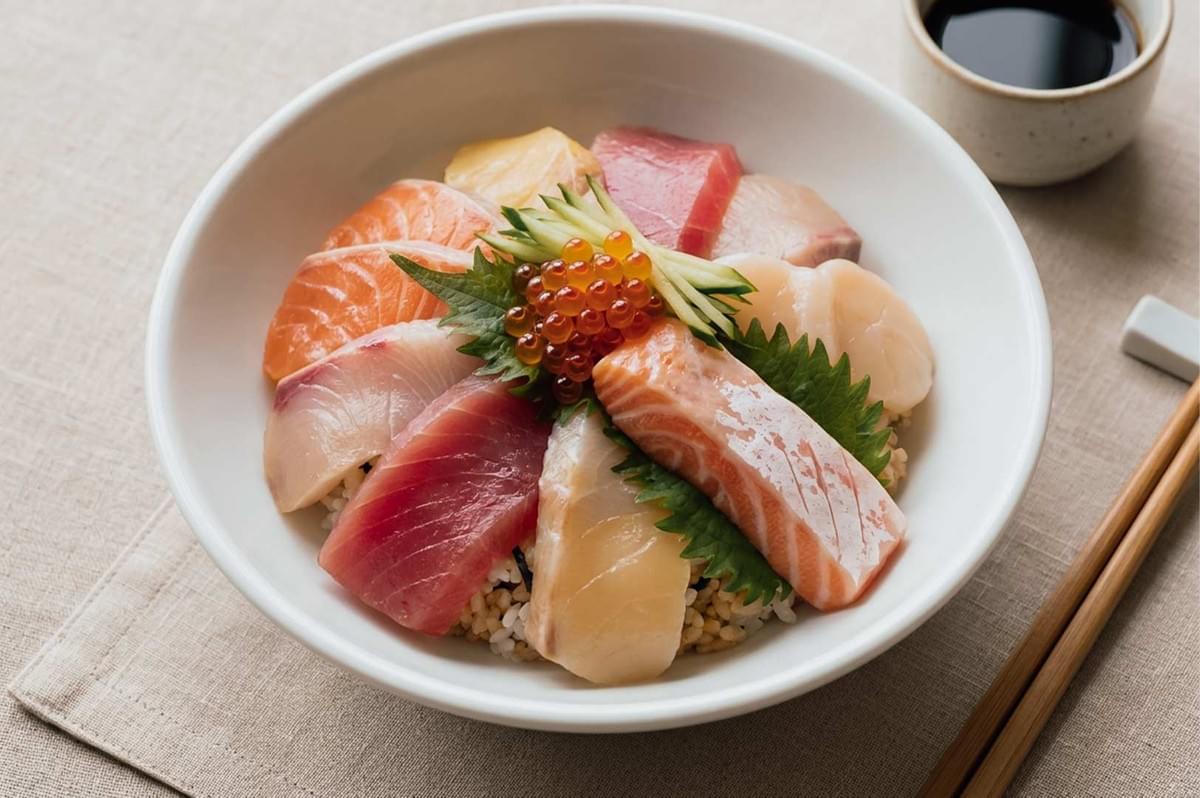
The version most people in Singapore recognise as chirashi is the sashimi-forward chirashi don. Here, the bowl is usually built around sushi rice topped with sashimi grade fish, including salmon, tuna, yellowtail, scallop, and shrimp, with richer cuts such as salmon belly appearing in more indulgent versions. Ikura, flying fish roe, cucumber, shiso, and other fresh garnishes may be added for colour and texture.
These are some of the common toppings that have come to define modern chirashi outside Japan, particularly in restaurants where diners expect a generous spread of sashimi. The result is a complete meal that feels luxurious without requiring the formality of hand pressed sushi or individually shaped nigiri. For anyone who enjoys sashimi, this is often the most approachable form of chirashi because the fish remains unmistakably central.
A little soy sauce is usually enough to season the fish, while the acidity of the rice helps balance fattier cuts like salmon belly. Good chirashi should not feel overloaded; the best versions let each slice retain its own texture and flavour. It is less about quantity than the relationship between rice, fish, and the other toppings.
Kaisen Don: Similar, but Not Quite Chirashi
A bowl of seafood over rice can also be called kaisen don, and this is where the terminology sometimes becomes confusing. Kaisen don usually refers more broadly to a seafood rice bowl and may use plain rice rather than seasoned sushi rice, which separates it from traditional chirashi sushi. The toppings, however, can look almost identical, with sashimi grade salmon, tuna, scallop, shrimp, ikura, and other seafood arranged neatly over the top.
In the Kanto region, particularly around Tokyo, seafood rice bowls have become so familiar that the visual line between kaisen don and chirashi can feel blurred. A useful way to think about it is that chirashi is more closely tied to the sushi tradition and vinegared rice, while kaisen don is simply a broader seafood-over-rice category. Both can be excellent, but they are built from slightly different culinary ideas.
Cooked Chirashi: Not Every Bowl Needs Raw Fish
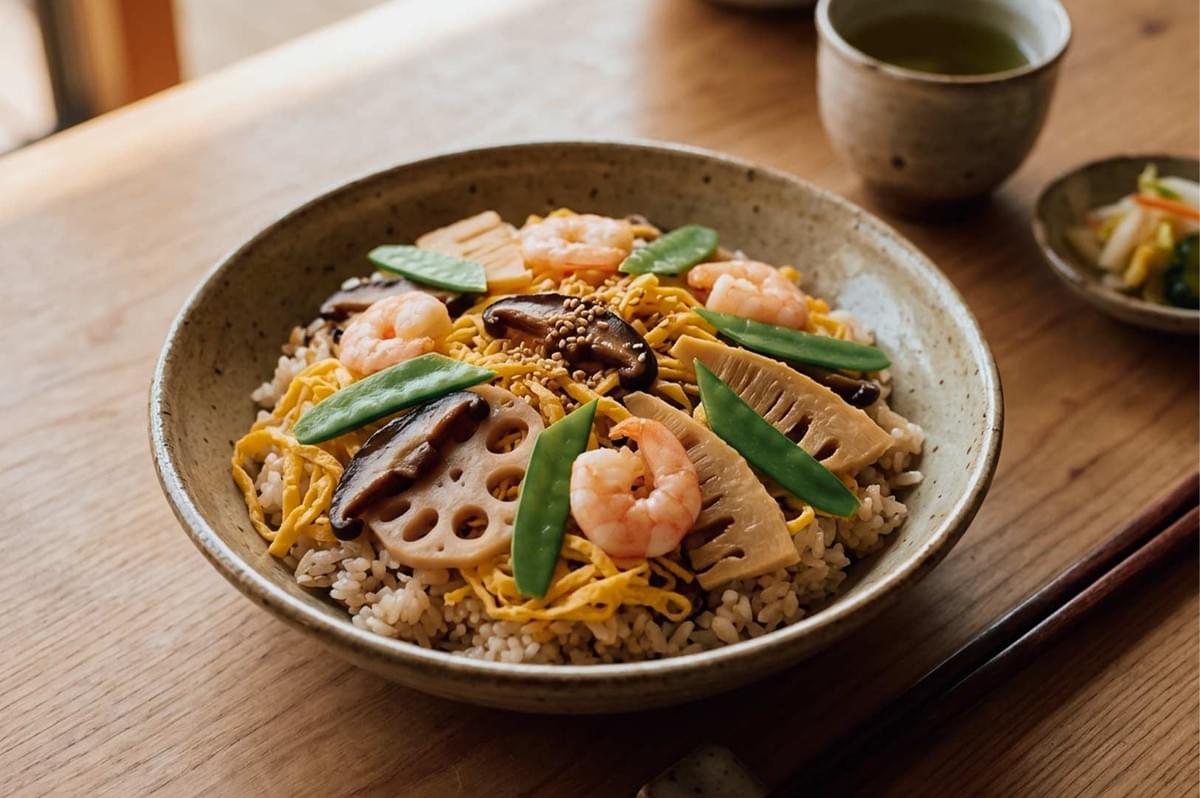
Chirashi does not have to revolve around sashimi. Some styles use mostly cooked ingredients, making them very different from the raw seafood bowls many diners expect, and a home-style chirashi recipe might feature simmered shiitake mushrooms, lotus root, bamboo shoots, vegetables, egg, and cooked seafood. These can be arranged over the rice or mixed through it, creating a dish that feels closer to everyday Japanese home cooking.
For home cooks, it helps to prepare toppings before assembling the bowl so that temperature and texture can be controlled more easily. If you prepare the toppings first, you can slice the fish, cool the vegetables, make kinshi tamago, and season the rice without rushing. Some recipes may also ask you to prepare the sushi seasoning in a small saucepan, then fold it gently through the cooked rice once it has cooled slightly.
This style shows how flexible chirashi can be. It is less about following one fixed formula and more about balancing all the ingredients so that no single element overwhelms the rest. The rice, vegetables, seafood, egg, and garnishes should all have a reason to be there.
Modern Chirashi: Sushi Cups, Luxury Bowls, and New Interpretations
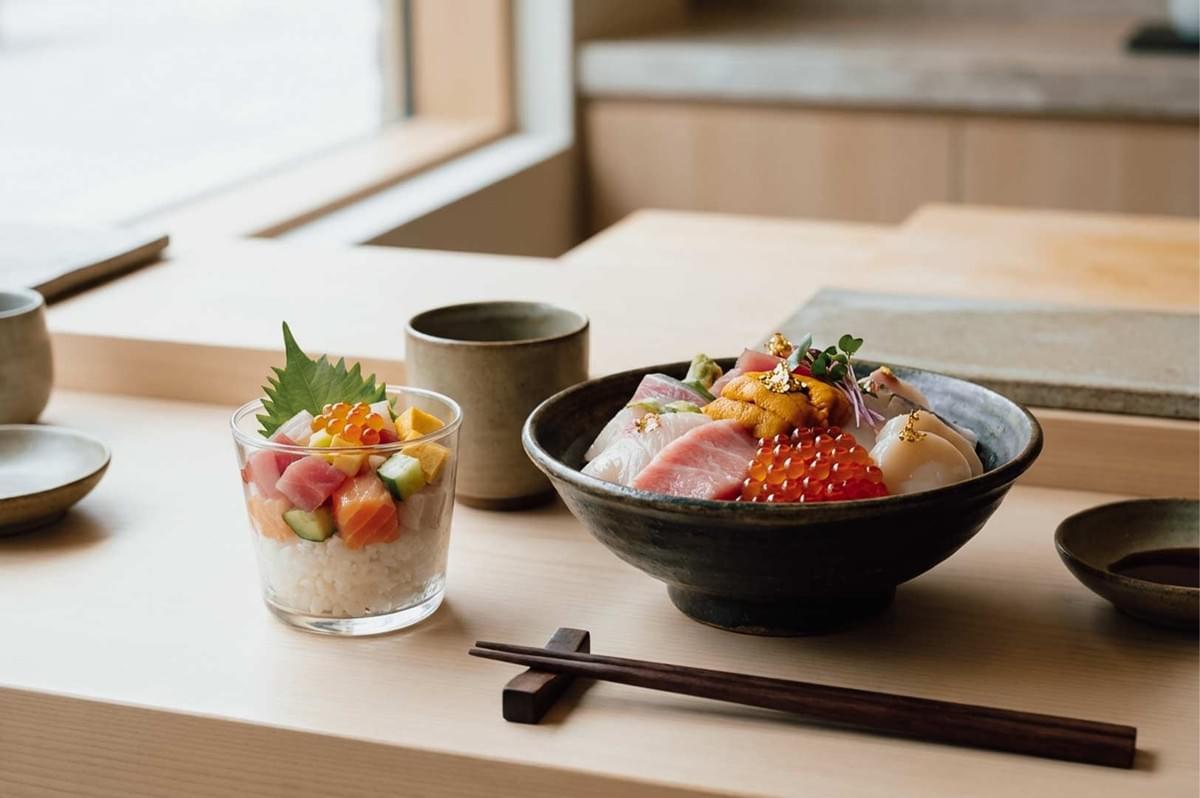
Chirashi has also become a format that chefs can reinterpret. Some restaurants serve miniature sushi cups, layering rice, seafood, egg, and vegetables into small portions, while others create premium bowls built around sashimi grade fish, uni, ikura, or seasonal seafood. At the other end of the spectrum are affordable chirashi bowls, where prices start lower because the fish selection may be simpler or the portions smaller.
In Singapore, names such as Chirashizushi Shou show how the format has developed into a distinct category within the local Japanese dining scene. The appeal is obvious: chirashi can be simple enough for lunch, but elaborate enough to feel celebratory. It can also be adapted more easily than many other kinds of sushi, because the arrangement of the toppings can change with the season, the budget, or whatever ingredients are freshest that day.
How to Tell a Good Chirashi Bowl
Regardless of style, a good chirashi bowl depends on balance. The rice should be properly seasoned, not overly sweet or sour, while the fish should taste clean and fresh and the vegetables should add texture rather than compete with the seafood. Even generous bowls should still feel composed rather than crowded.
If raw seafood is involved, sourcing becomes especially important. Fish intended for raw consumption should be handled appropriately to reduce food-safety risks, including those associated with potential parasites, and the term sashimi grade should never replace good judgement about sourcing and storage. Buying from a trusted supplier and keeping seafood properly chilled matters just as much as the species you choose.
A Little Tokyo in the Middle of Raffles Place
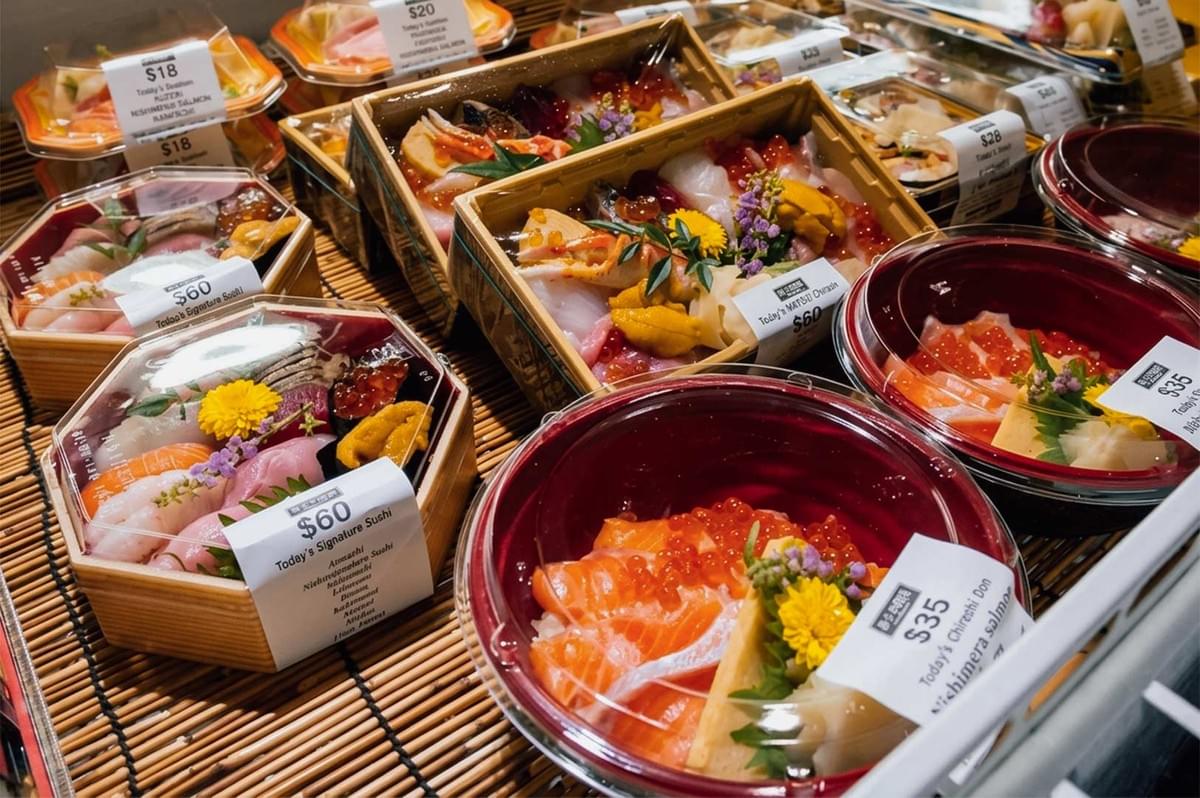
For sashimi-forward chirashi, the fish is the entire point, which is where Araya Shouten becomes particularly relevant. The Japanese fishmonger in Singapore is built around sourcing and handling rather than simply stocking familiar species, and founder Araya-san comes from a Hokkaido fishing family with years of experience in seafood logistics and import-export. His approach focuses on what happens immediately after the catch: bleeding, gutting, cleaning, and moving the fish quickly from Japanese ports to Singapore.
That matters in chirashi because there is very little cooking or seasoning to hide poor handling. When a slice of salmon, tuna, or yellowtail sits directly over rice, texture and freshness become obvious, and better handling can be tasted immediately. Araya Shouten also follows seasonal availability instead of keeping the same fish all year, which means a chirashi bowl inspired by the shop may change depending on what the ocean is producing and not just served with the best sashimi they have.
For diners, this is a useful reminder that two bowls can look almost identical while tasting completely different. The ingredients may appear similar, but the supply chain behind them is not. In a dish as exposed as chirashi, sourcing becomes part of the flavour.
Which Type of Chirashi Should You Try?
If you prefer raw seafood, a sashimi-heavy chirashi don is the easiest place to start. If you want something closer to traditional Japanese home cooking, look for chirashizushi with vegetables, kinshi tamago, mushrooms, and cooked ingredients, while diners who prefer a simpler seafood-over-rice format may find kaisen don closer to what they are looking for. Each version shares the same basic spirit but arrives at the bowl from a slightly different direction.
And if you are exploring delicious japanese food in Singapore, it is worth trying more than one style. Chirashi is not a single recipe but a family of dishes connected by rice, fish, seafood, vegetables, and carefully chosen toppings. At its simplest, it is just food in a bowl, but depending on how the ingredients are seasoned, sliced, and arranged, the same idea can become something completely different.
That is the real pleasure of chirashi: one name, many bowls.
