

A specific kind of quiet settles into an apartment when you are cooking for yourself after a long, disorienting day. You stand in the kitchen, opening and closing the fridge, looking for something that requires minimal effort but promises maximum comfort. This is usually the exact moment I reach for a heavy iron skillet, a can of crushed tomatoes, and a carton of eggs.
Within ten minutes, the kitchen smells like garlic, cumin, and sweet, simmering peppers. The eggs drop into small wells of bubbling red sauce, their whites slowly turning opaque while the yolks remain fragile and golden. It doesn't matter if it is nine in the morning on a lazy Sunday or nine at night on a rainy Tuesday. This is the quiet, unassuming magic of shakshuka.
For many of us navigating life far from our original homes, food becomes a way to build a temporary sanctuary. But while some dishes require hours of slow braising or highly specific, hard-to-find ingredients, shakshuka asks almost nothing of you. It meets you exactly where you are, using the humblest of pantry staples to create something that feels deeply generous.
The Universal Comfort of the Skillet
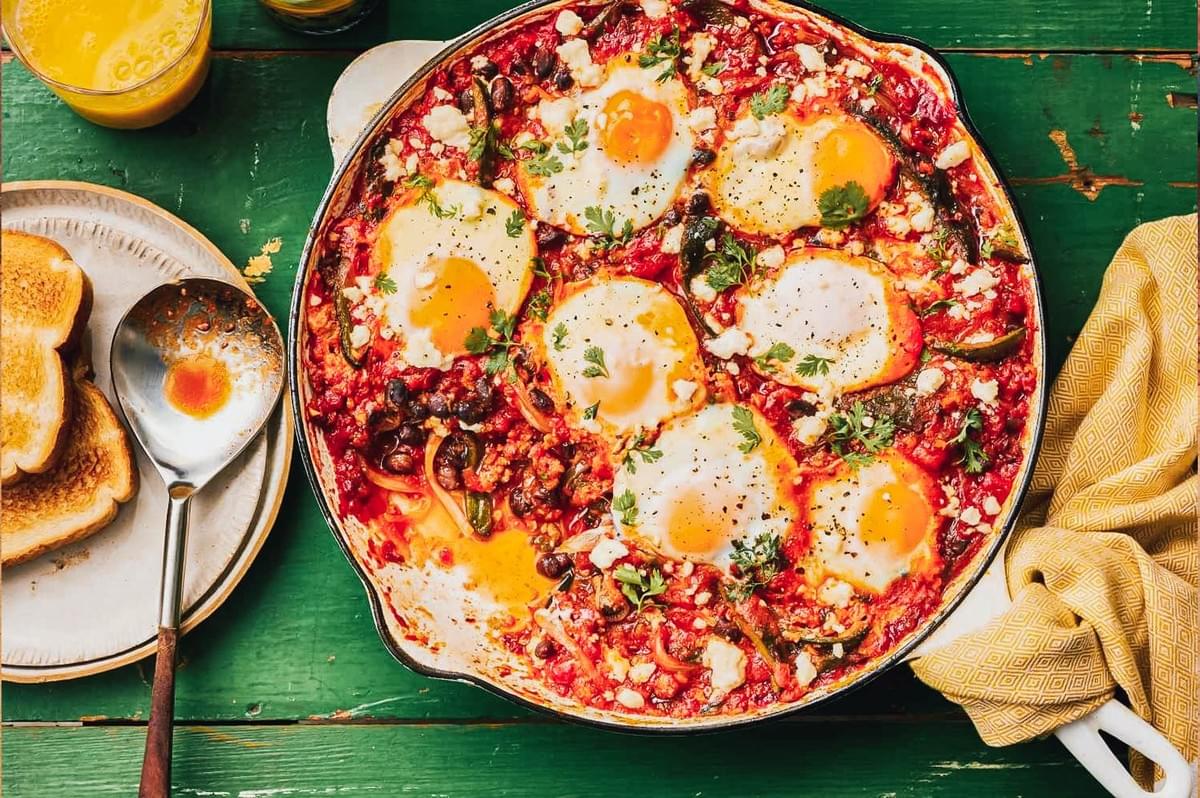
There is something inherently grounding about tomato and egg skillet dishes. Almost every culinary culture has discovered the alchemy of poaching or frying eggs in a rich, acidic sauce. In Italy, there is eggs in purgatory. In Mexico, you find huevos rancheros. But it is Israeli shakshuka that has recently taken the world by storm, leaping from regional staple to a fixture of global café culture.
Why does this specific combination feel so universally comforting? Part of the appeal lies in the visual warmth—that vibrant, sputtering red sauce contrasting with the bright yellow yolks. It is a dish that arrives at the table still cooking, carrying the heat of the stove directly to your plate. It feels alive.
But beyond the aesthetics, shakshuka taps into our primal need for simple, hearty sustenance. It is rustic and unpretentious. You don't need fancy plating or delicate garnishes. You just need a spoon, a pan, and a willingness to dig in.
A Dish Born of Movement
Today, it is impossible to talk about Middle Eastern breakfast dishes without putting shakshuka at the center of the table. But its history of migration is precisely what makes it resonate so deeply with expatriates and travelers today.
It is a dish born of adaptation. It knows how to make itself at home in new environments.
The Time-Bending Magic of Shakshuka
One of the great unwritten rules of modern dining is that certain foods belong to certain hours. Cereal is for mornings; roast chicken is for evenings. Shakshuka politely ignores these boundaries.
- For Breakfast: It is the ultimate weekend centerpiece, offering a savory, spiced alternative to pancakes or pastries.
- For Lunch: Paired with a simple green salad, it becomes a bright, energizing midday meal that won't leave you feeling sluggish.
- For Dinner: When you are exhausted and the fridge is mostly empty, shakshuka transforms basic pantry staples into one of the most satisfying comfort food meals imaginable.This time-bending flexibility is a lifesaver for students, busy professionals, and expats dealing with jet lag. It is also why dishes like shakshuka appear so often in conversations around comfort cooking and adaptation at Expat Eat. It asks so little but provides so much. You can throw in wilting spinach, leftover roasted vegetables, or a crumbling block of feta. The shakshuka recipe culture is not rigid; it is a template, an invitation to use what you have and make it your own.
Global Café Culture and the Expat Connection
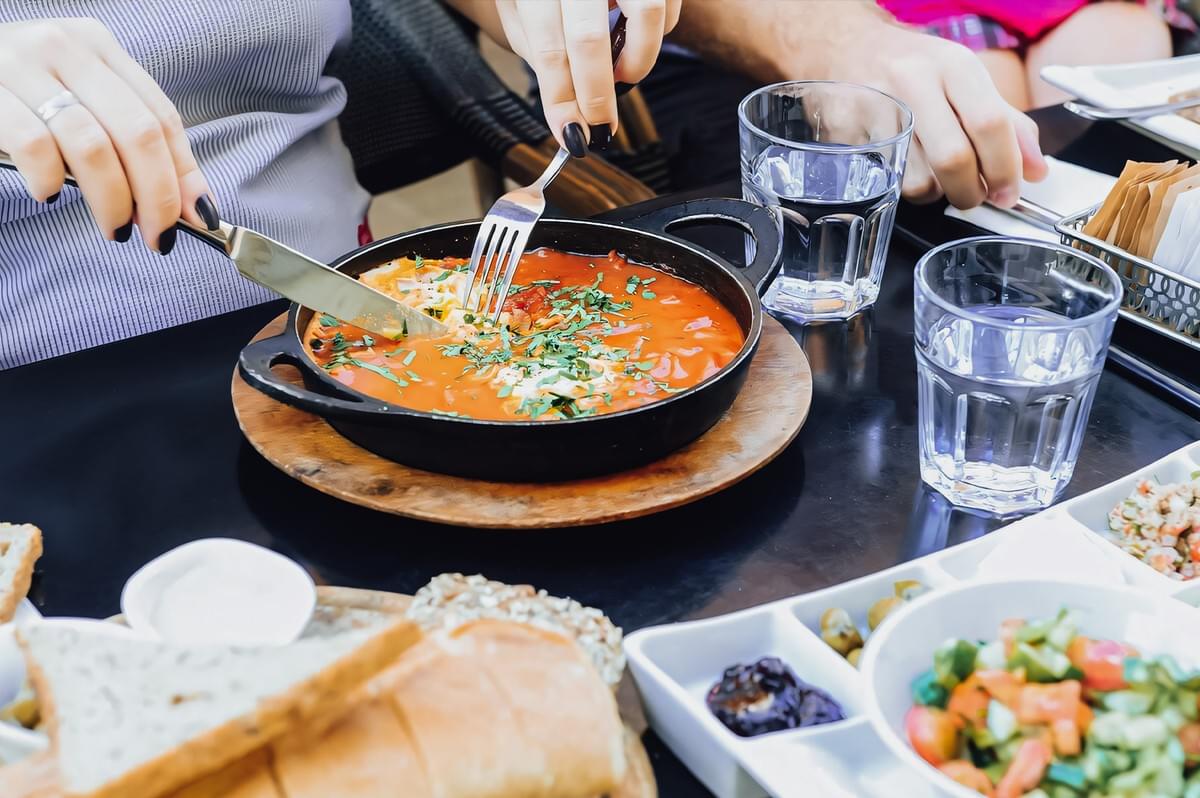
Over the past decade, shakshuka has migrated once again, this time from home kitchens to the menus of trendy cafes from Melbourne to Berlin, Brooklyn to Tokyo. It has become a darling of the brunch crowd, often arriving in individual cast-iron skillets alongside artisanal coffees.
But even as it is elevated and reinterpreted—sometimes topped with labneh and za'atar, other times fortified with spicy merguez sausage—it retains its core identity. Among egg dishes, it remains uniquely unpretentious.
For the expat, finding shakshuka on a menu in a foreign city often feels like spotting a familiar face in a crowd. It is a reliable anchor when you are overwhelmed by unfamiliar local cuisines. It reminds us that no matter how far we travel, the simple combination of eggs, tomatoes, and spices will always offer a taste of home, even if that home is just a feeling rather than a place.
The Mixture We Make
We spend so much time searching for the perfect recipe, the authentic technique, the definitive way to make a dish. But shakshuka reminds us that food is a living, breathing thing. It changes. It adapts. It gets "shaken up."
Whether you are cooking it for yourself in a quiet apartment after a long day of navigating a new culture, or sharing it straight from the pan with new friends on a lazy Sunday morning, shakshuka is a reminder of the beauty of resilience. It takes whatever you have on hand and turns it into something warm, vibrant, and deeply nourishing.
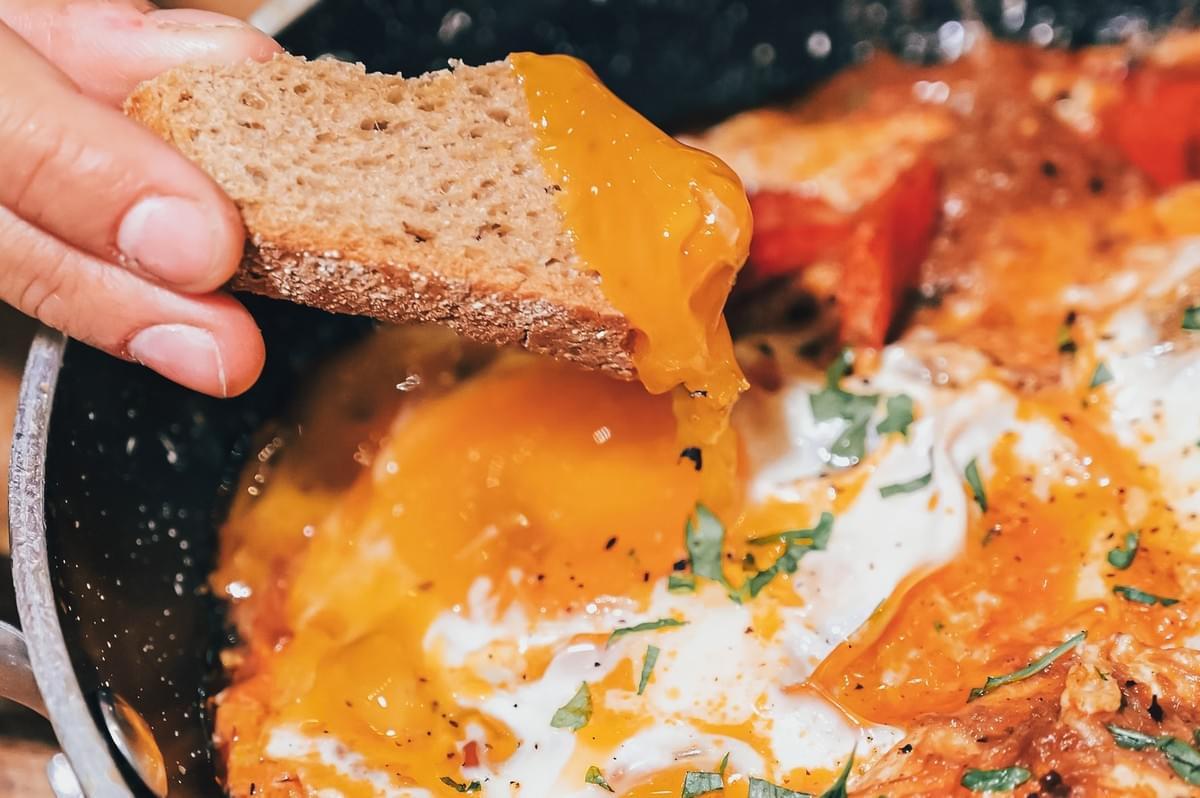
If you have never experienced the simple joy of this skillet meal, I encourage you to try it this week. Don't worry about finding the perfect recipe. Just heat some oil, soften some onions and peppers, pour in the tomatoes, and let the eggs do their work. Grab a piece of good bread, bring the pan to the table, and see how quickly a simple mixture can feel exactly like home.
