

Back in Singapore, Hokkien mee can feel almost ordinary. It is lunch after work, something picked up when the day is busy. The plate arrives hot, the noodles carry that smoky wok fragrance, and somehow the whole thing disappears before you think much about it.
Then an expat moves abroad and decides to make it.
The noodles become a question. Which noodles are close enough? The prawns have to be fresh. The stock needs depth. Garlic matters. The balance between yellow noodles and rice vermicelli matters more than expected. Even the heat of the pan starts to feel important.
That is when a familiar Singapore dish reveals how many small decisions sit behind it.
The Ingredients Suddenly Matter
At home, ingredients are easy to take for granted. Abroad, an expat may have to search through Asian supermarkets, order online, or accept that something familiar is unavailable.
That can be frustrating when a food memory has a specific taste attached to it. But it also teaches something useful: not every ingredient carries the same weight.
Then There Is the Wok
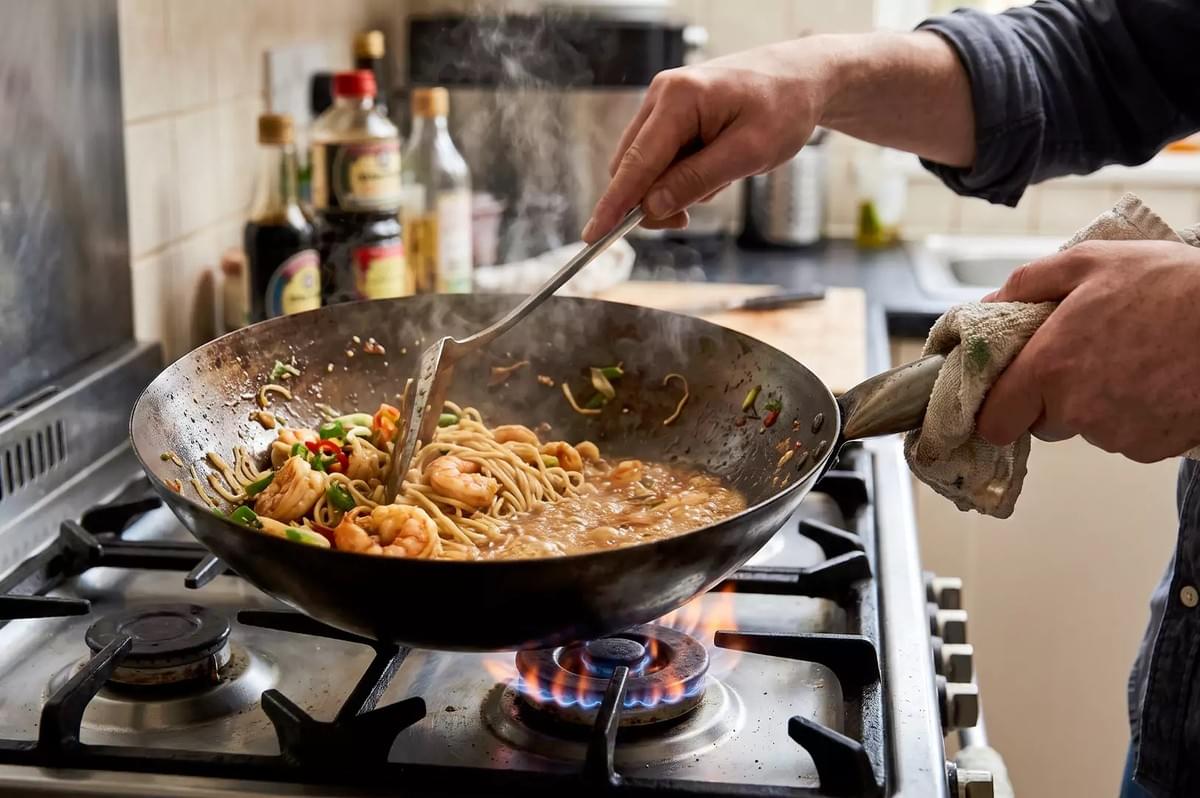
The hardest part may be the flavour that is difficult to describe until it is missing: wok hei, that smoky character associated with high-heat cooking.
An overseas home kitchen may not have the same wok, burner or setup as a Singapore hawker stall. Trying to recreate that intensity can become a small comedy of errors — one pan too crowded, one batch too wet.
Still, every attempt teaches something. The noodles need time to absorb the broth, while the seafood should not disappear beneath the seasoning.
For anyone who wants to remember the original, it can help to revisit Hokkien mee favourites in Singapore before trying to recreate the dish abroad.
The Almost-Right Plate
Eventually, an expat may produce a plate that tastes close but not identical.
The first bite can bring back hawker-centre memories, even when the noodles are slightly different. What once seemed like an everyday lunch suddenly feels like something worth noticing.
Cooking abroad makes ordinary food feel precious because distance removes the assumption that familiar things will always be available.
A plate of Hokkien mee becomes more than noodles, seafood and broth. It becomes a reminder of a place — of quick lunches, crowded tables and hot woks.
Appreciation, One Plate at a Time
Moving abroad can make people notice the things they once overlooked, including the work hidden inside a dish they thought they knew.
Maybe the noodles are different. Maybe the prawns came from a supermarket three neighbourhoods away. Maybe the wok hei had to be replaced with the closest approximation a home stove could manage.
It is still a piece of Singapore carried forward.
And that may be why the harder Hokkien mee is to recreate abroad, the more meaningful the first successful plate becomes. The dish has been searched for, adapted, remembered and brought into a new life.
Back home, it was just lunch. Away from home, it becomes something worth noticing far from home.
