

The floor of the morning market is slick with melted ice and crushed green leaves. The air is thick, carrying the sharp tang of raw ginger, the oceanic salt of freshly caught fish, and the sweet, fermented scent of overripe mangoes. Beside me, a small hand grips mine tightly. My daughter’s eyes are wide, taking in the towers of unfamiliar produce, the rhythmic thud of a butcher’s cleaver, and a language she does not yet understand floating through the humid air.
For the newly arrived expatriate, grocery shopping is often a logistical hurdle—a chore fraught with translation errors and the quiet grief of not being able to find a specific brand of cereal that tastes like home. But when we bring our children into these spaces, the paradigm shifts. Through their eyes, the foreign supermarket or the bustling neighborhood wet market ceases to be an obstacle course. Instead, it becomes a living, breathing classroom.
When we move across oceans, we sever our children from their familiar geographies. We take away their known parks, their schools, and their usual snacks. Yet, in the aisles of a new grocery store, we are given a profound opportunity to anchor them again. These weekly excursions are more than just a way to fill the pantry; they are foundational lessons in adaptability, cultural literacy, and belonging.
The Wet Market as a Sensory Classroom
There is a distinct difference between the sterile, fluorescent-lit aisles of a Western supermarket and the chaotic, vibrant reality of a traditional wet market or open-air bazaar. In these local markets, food is not hidden behind plastic wrap. It is immediate, tactile, and unapologetically real.
Touching, Smelling, and Asking Questions
Children are inherently sensory learners. In a foreign market, they are invited to engage with the world in a way that formal schooling rarely permits. When my daughter first saw a jackfruit—a massive, dinosaur-like green orb resting on a wooden pallet—her immediate instinct was to touch its spiked skin.
These moments of curiosity are educational goldmines. Instead of rushing through the shopping list, we can pause. We can ask the vendor what the fruit tastes like. We can buy a small slice to taste on the walk home. This simple act of trying something new in its rawest form teaches children that the unfamiliar is not something to be feared, but something to be explored. It builds a quiet culinary courage that translates into broader cultural confidence.
Reading the Aisles: Language and Literacy
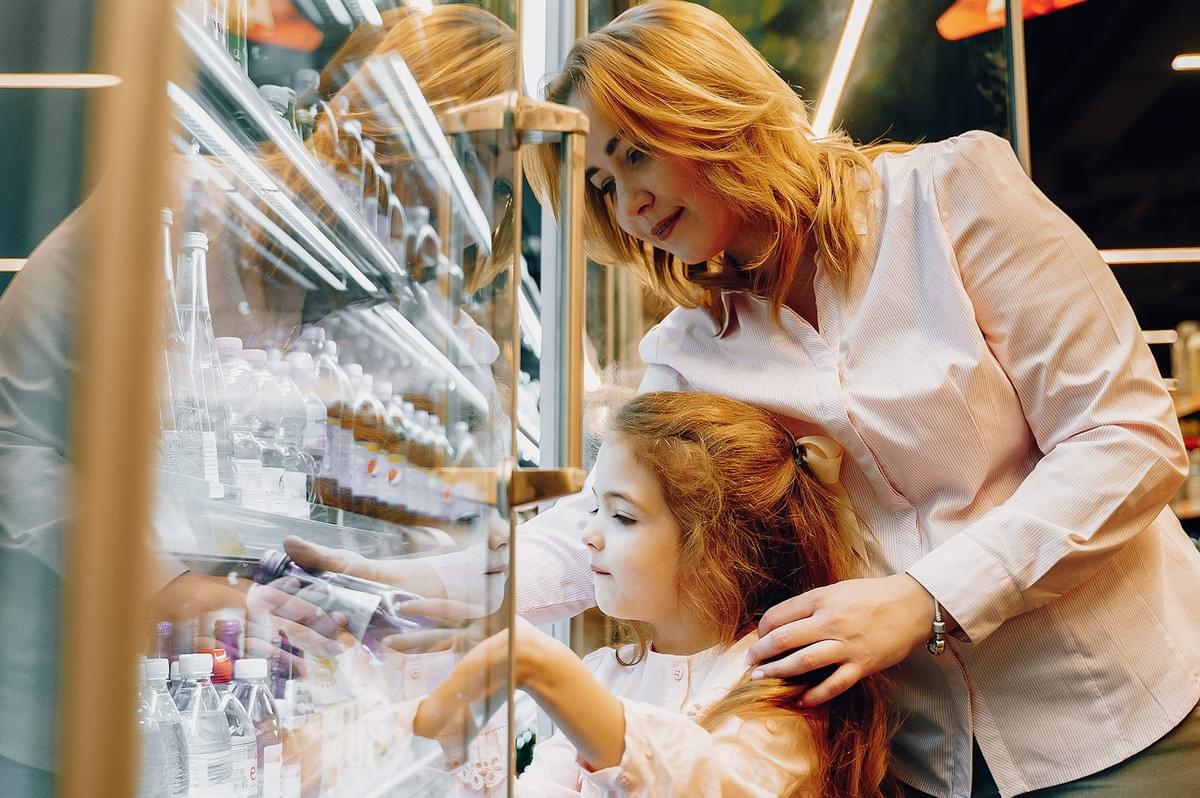
One of the most intimidating aspects of moving to a new country is the language barrier. For expatriate children entering local or international schools, the pressure to acquire a new language can be immense. The grocery store, however, offers a low-stakes environment for language acquisition.
When you are standing in the dairy aisle trying to decipher which carton is whole milk and which is drinking yogurt, you and your child become detectives together.
- Learning through context: We match images on labels to the words beneath them. We learn the local word for apple because we are holding one.
- Shared vulnerability: When a parent admits, "I don't know what this says, let's figure it out," it shows the child that it is perfectly acceptable to be a learner.
- Practical vocabulary: Children often pick up food vocabulary—numbers, greetings, and basic nouns—far faster in a market setting than in a classroom, simply because the knowledge is immediately useful.
Building Flexibility Through Substitution

Perhaps the most vital, and sometimes the most painful, lesson an expatriate child learns is the art of pivoting. Things will not always go according to plan abroad, and the grocery store is the perfect microcosm for this reality.
You set out to make a traditional family recipe for a holiday dinner, only to find that a crucial ingredient simply does not exist in your host country. The flour behaves differently. The butter has a different fat content. The specific cut of meat is butchered in an entirely different style.
This is where the magic of substitution happens. When we narrate this process to our children—"We can't find sour cream, so we are going to try using this local thick yogurt instead"—we are modeling resilience. We are teaching them that a rigid attachment to the way things "used to be" will only lead to frustration. True comfort comes from flexibility.
Over time, this culinary adaptability bleeds into their broader psychological framework. A child who learns to accept a local pastry in place of their usual packaged cookie is subtly training their brain to accept a new routine, a new school, or a new set of friends. They learn that different does not inherently mean worse; it is simply a variation of the human experience.
Embracing the Stroll
Raising children between cultures is a delicate, beautiful, and endlessly complex endeavor. We spend so much time worrying about their schooling, their social integration, and their emotional well-being that we often overlook the profound teaching moments hidden in our everyday chores.
The next time you find yourself navigating a crowded aisle or a noisy market in your host country, I encourage you to slow your pace. Look at the shelves not just as a means to an end, but as a museum of your new culture. Invite your children to ask questions about the strange, spiky vegetables. Let them listen to the cadence of the butcher’s negotiations. Allow them to pick a snack whose label they cannot read, purely for the adventure of finding out what it tastes like.
In these quiet, ordinary moments of culinary exploration, we do more than just feed our children. We teach them how to be curious, resilient, and open-hearted citizens of the world. And in doing so, we just might teach ourselves the exact same thing.
